
What is Adenomyosis?
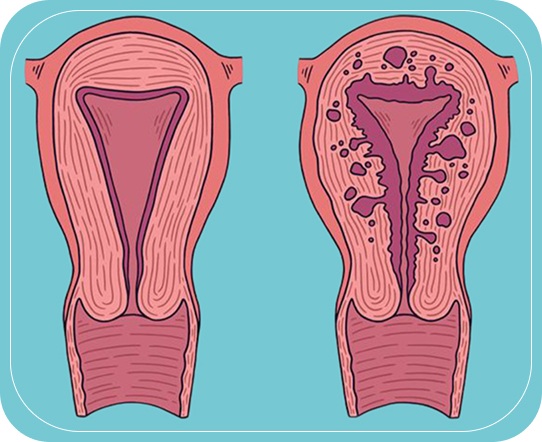
Signs & Symptoms of Adenomyosis

Heavy or prolonged menstrual bleeding

Severe period cramps

Sharp, knife-like pelvic pain during menstruation (dysmenorrhea)

Chronic pelvic pain or pressure

Painful intercourse (dyspareunia)

Enlarged uterus

Bloating or a feeling of heaviness in the pelvis

Spotting between periods
Signs & Symptoms of Adenomyosis
Heavy or prolonged menstrual bleeding
Severe period cramps
Sharp, knife-like pelvic pain during menstruation (dysmenorrhea)
Chronic pelvic pain or pressure
Painful intercourse (dyspareunia)
Enlarged uterus
Bloating or a feeling of heaviness in the pelvis
Spotting between periods
Causes & Risk Factors of Adenomyosis

Planning Parenthood? We Are Here to Help!
Your dreams of parenthood matters to us. Get compassionate care and personalised guidance for all your family planning needs.

Have a Question? Ask Us Anything
When to Consult Procreacion?

Diagnosis Process

Detailed medical history review

Pelvic examination

Transvaginal ultrasound

MRI scans

Endometrial biopsy (if needed)
Schedule an appointment with experienced gynaecologists at Procreacion to experience our expert care.
Why Choose Procreacion for Adenomyosis Treatment?

25+ Years of Clinical Excellence in Gynaecology

Advanced Technology

Combination of Experience with Youth

Patient-centric Approach

Adenomyosis Treatment Options
Treatment options vary depending on the severity of symptoms and your planning for future pregnancies. They may include:

Pain medication.

Hormone therapy (e.g., birth control pills, GnRH agonists).

Endometrial ablation.

Uterine artery embolisation.

Hysterectomy (in severe cases).
Everything You Need to Know
Can’t find what you’re looking for?
Is adenomyosis the same as endometriosis?
No, they are different. Endometriosis involves tissue development outside the uterus, while adenomyosis involves tissue growth within the uterine wall.
Can adenomyosis go away on its own?
Adenomyosis often improves after menopause but does not disappear entirely without treatment.
What happens if adenomyosis is left untreated?
Untreated adenomyosis can worsen pain and bleeding and affect daily life and overall well-being.
Does adenomyosis cause infertility?
It can contribute to fertility issues in some women by affecting implantation and increasing the risk of miscarriages. Proper treatment can improve pregnancy chances.
Can I still have children if I have adenomyosis?
Many women with adenomyosis successfully conceive and carry pregnancies to term. However, in our clinic, fertility-preserving treatments are also available for those who are planning future pregnancies.
Can’t find what you’re looking for?